
Screen Time vs Puzzle Time: Which Are the Best Games to Improve Focus and Challenge Your Brain?

Finding the Best Games to Improve Focus doesn't always mean downloading another app. Digital games can demand quick attention, while hands-on wooden puzzles offer a slower, screen-free way to concentrate, observe and solve.
So, which kind of play gives your mind the challenge you're looking for?
Screen Time Is Not All the Same
Not every minute spent looking at a screen is the same.
A fast digital game may ask you to track movement, remember rules and react instantly. A strategy game can require planning and decision-making.
Active digital games may involve:
Attention
Memory
Fast decision-making
Hand-eye coordination
Strategic thinking.
The Best Games to Improve Focus Can Feel Slower
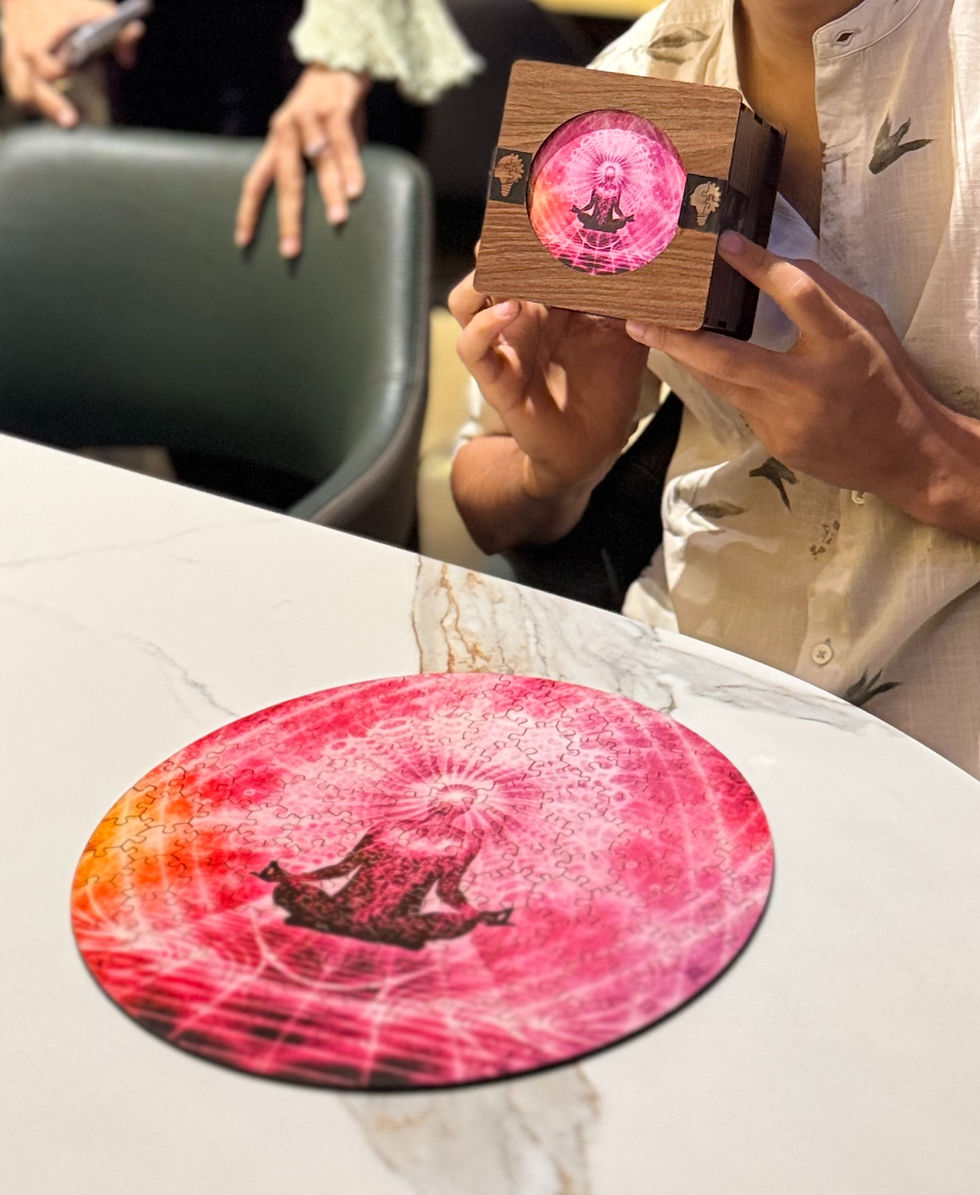
There are no notifications inside a Circular puzzle. No animation tells you where the next piece belongs.
You have to look, compare and decide for yourself.
A round puzzle or adult jigsaw can therefore create a slower form of engagement where attention stays on one physical challenge.
For a gentler starting point, Synthesis Focus Training Puzzle is a Level 3 wooden puzzle with a nature-inspired design built around a calmer, focus-oriented solving experience.
Physical Puzzles Challenge Visual Attention
A puzzle looks simple until you start solving it.
You may need to recognise colours, compare shapes, mentally rotate pieces and remember where you noticed a similar pattern earlier.
Research into jigsaw puzzling has found that it engages multiple visuospatial abilities, including:
Perception
Mental rotation
Working memory
Reasoning
Cognitive flexibility
A cogzart puzzle can add another layer because familiar straight edges and four corners are no longer the obvious starting points.
Alpha Blue — Brain Training Game, for example, combines a circular wooden format with a hexagonal grid and intricate geometric artwork.
Screen-Free Play Changes the Experience
With a physical wooden puzzle, the environment can be much quieter. You control the pace and decide where your attention goes next.
That doesn't mean every physical puzzle is automatically better for concentration than every digital game. They simply create different experiences.
For people who spend much of the day moving between screens, a hands-on puzzle can offer a welcome change of pace.
If you enjoy combining visual observation with memory-oriented play, Elephant — Memory Training Puzzle offers a more advanced wooden puzzle experience built around a detailed blue mosaic design.
Different Puzzle Designs Create Different Challenges
This is where CircZles takes a different approach to the standard rectangular adult jigsaw. Its circular format and hexagonal grid encourage players to pay closer attention to patterns and piece relationships.
For players who enjoy the strategy side of puzzling, Mind Map — Strategic Brain Puzzle specifically uses its hexagonal grid to disrupt familiar patterns and encourage a different approach to problem-solving.
The puzzle doesn't need to change only in difficulty.
It can change how you think about solving it.
The Best Activity Is One You Want to Return To
Even the Best Games to Improve Focus aren't useful if you don't enjoy playing them.
Some people prefer the speed of digital strategy games. Others would rather sit with a challenging wooden puzzle for adults and work through it piece by piece.
You can also enjoy both.
Try:
Digital strategy games when you want rapid decisions.
A round puzzle when you want screen-free play.
An adult jigsaw when you want slower visual problem-solving.
Speed-solving when you want competition.
Detailed circular designs when you want a harder visual test.
Conclusion
So, screen time or puzzle time—which challenges your brain more?
There isn't one universal winner.
Digital games can demanhttps://www.circzles.in/d quick reactions and rapid decisions. Physical puzzles encourage a different style of play built around visual reasoning, patience and self-paced problem-solving.
The Best Games to Improve Focus may therefore depend on what you need at that moment.
Explore CircZles and discover a hands-on puzzle experience designed to keep you looking, thinking and solving until the final hex finds its place.
Citations
From screens to cognition: A scoping review of the impact of screen time on cognitive function in midlife and older adults.


Comments