
Why Players Keep Coming Back to Gamified Puzzle Challenges

A puzzle usually gives you one goal: finish it. Once every piece is in place, the experience can feel complete. But add progress, difficulty, competition, and another target waiting ahead, and a Gamified Puzzle starts to feel like more than a one-time activity.
Suddenly, finishing becomes the beginning of the next challenge. That replay loop is what can transform a quiet solving session into something players actively want to return to.
Why Gamified Puzzles Are Growing in Popularity
Gamified puzzles are becoming more popular because they offer more than a one-time solving experience. Players are not only trying to complete a puzzle they are also looking for better scores, new challenges, and a reason to come back again.
That extra layer of competition can make every attempt feel different. A player may finish one challenge and immediately want to improve their performance or move to the next level.
Some of the biggest reasons players return include:
New challenges to complete
Scores or personal records to beat
Different levels of difficulty
A stronger sense of progress
More opportunities to test speed and strategy
This is where a Gamified Puzzle becomes more engaging than a traditional solve-once activity. Instead of feeling finished after one attempt, players have another goal waiting for them making the experience feel fresh, competitive, and replayable.
Levels Make Improvement Visible
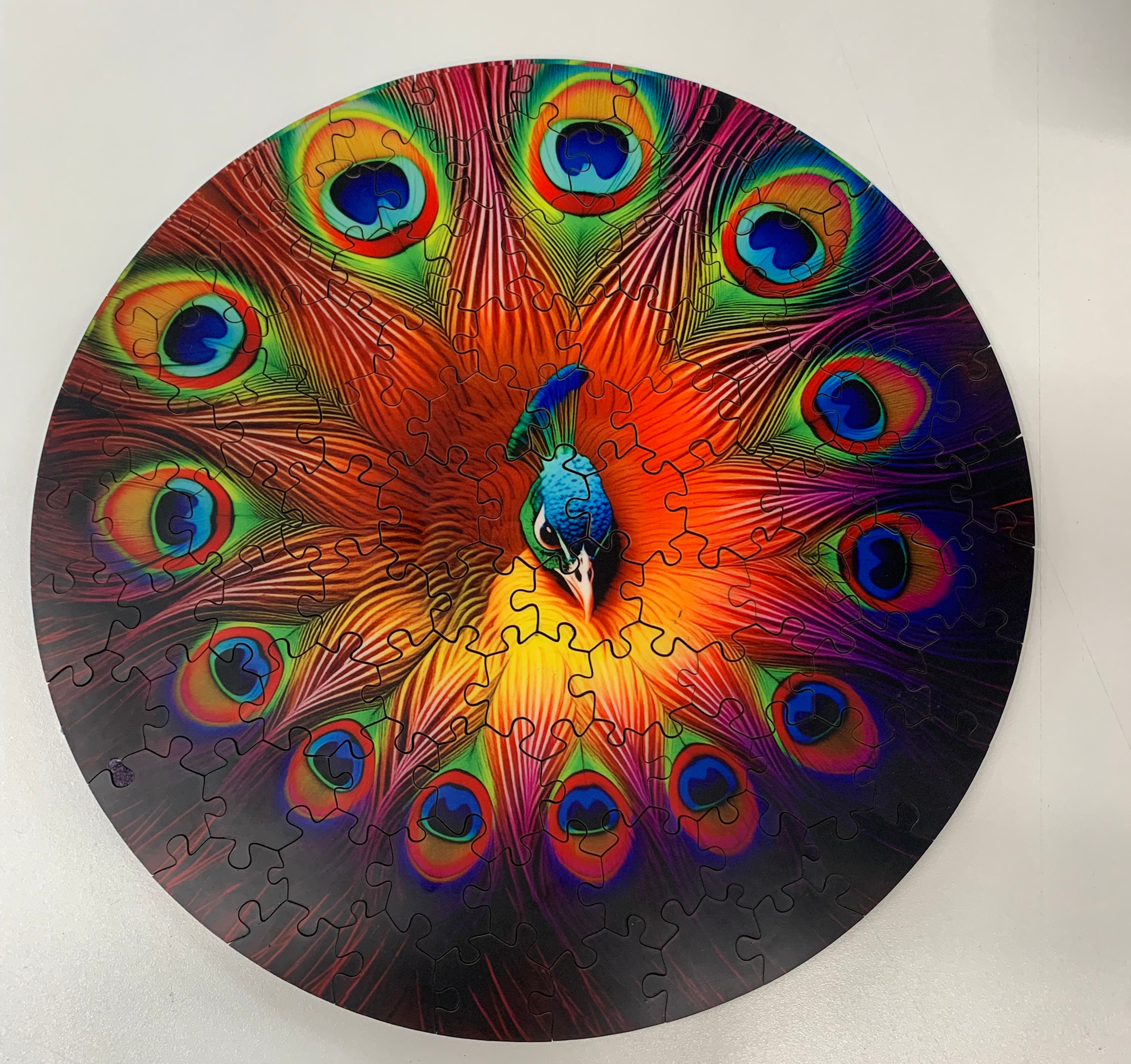
Progress feels more satisfying when you can actually see where you are going. CircZles structures its puzzle journey across 25 Levels of increasing grid complexity, making each Gamified Puzzle feel like part of a larger challenge rather than a standalone solve. That means a player moving forward is not simply choosing another picture. The physical challenge itself can become more demanding.
One Level might feel comfortable. The next can make you rethink how you sort, scan, and place every piece.
That creates a powerful question after finishing: Could I handle the next one?
Stages Stop the Challenge From Feeling Repetitive
Difficulty is not only about adding more pieces.
The experience moves through five visual Stages: Colorful, Monochrome, Repetitive, Minimal, and True Tone. Each can change which clues feel most useful while solving.
Bright colours may guide you during one challenge. Repeated patterns or reduced visual information can make another require more patience and observation.
The rules feel familiar, but the thinking changes.
Collections Give Players New Worlds to Explore
Variety matters when you want someone to keep playing.
Different collections such as Imaginarium, Carbon Based Life, Introspective, Antariksh, and Sacred Geometry bring their own artwork, ideas, and visual personalities into the experience.
Players are not only progressing through difficulty. They can discover designs that feel imaginative, reflective, scientific, cosmic, or abstract.
That makes choosing the next puzzle part of the fun.
Speed Solving Gives Every Finish Another Target
With a Gamified Puzzle, a CircZles attempt can become something measurable through recorded solves, verification, player progression, Synapse Points, and leaderboard competition.
Your previous finish time suddenly becomes a target.
And when there is a target to beat, the final piece does not always feel like the end.
Finish the puzzle. Beat your time. Explore the next Stage. Sometimes the most satisfying challenge is simply discovering how much further you can go.
Citations:
Gamification in Theory and Action: A Survey — International Journal of Human-Computer Studies


Comments