
How Interactive Puzzles Give Traditional Puzzles a Gaming Upgrade
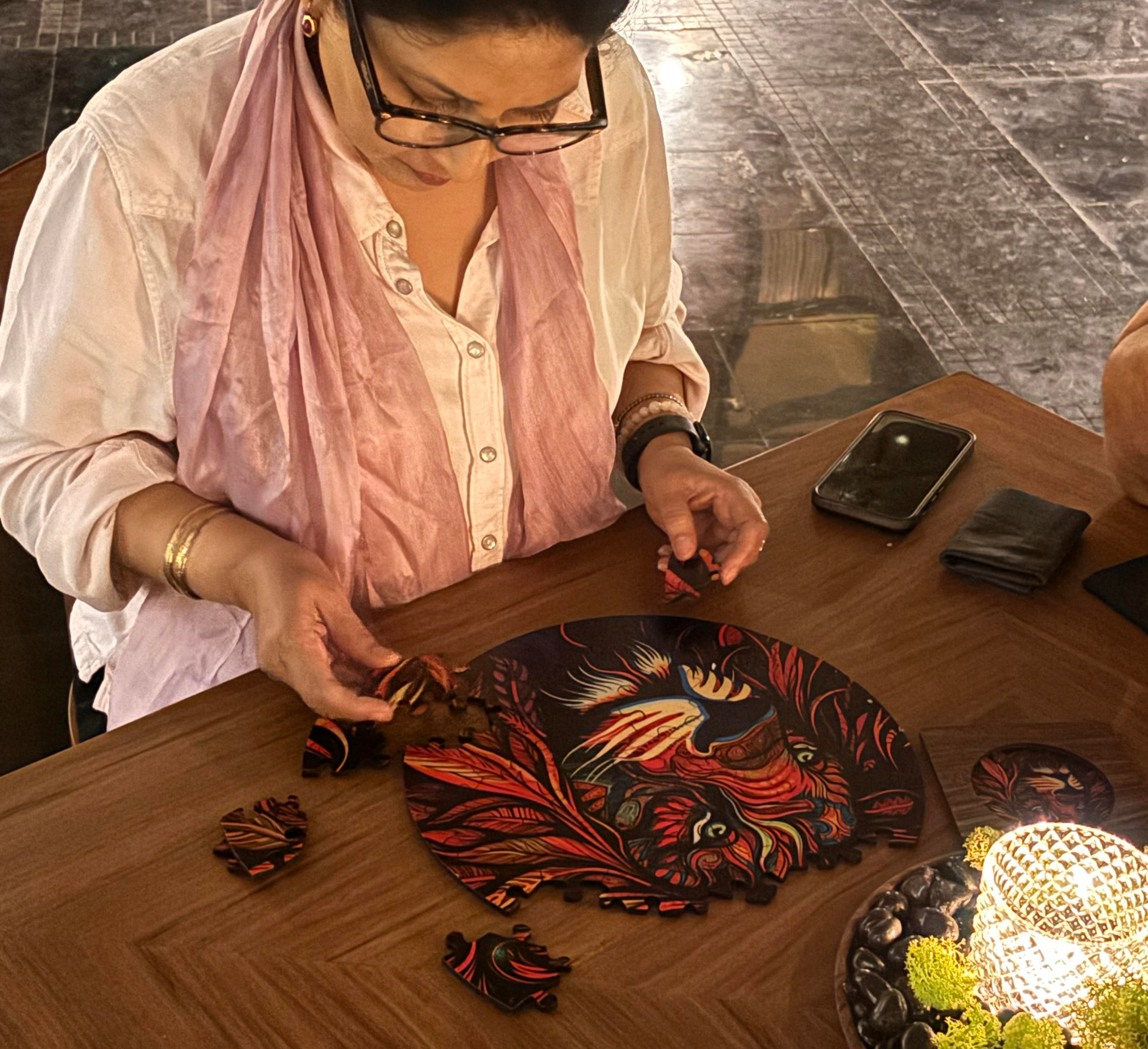
Traditional puzzles have always offered a simple satisfaction: find the right pieces, connect them, and watch the picture slowly come together.
But Interactive Puzzles can take that familiar activity further by adding progression, timed attempts, changing difficulty, and performance goals that give players more reasons to return.
How Interactive Puzzles Change the Way You Solve
The biggest difference is not the physical act of placing pieces. It is what you are trying to achieve while solving.
Instead of only completing the picture, you can challenge yourself to:
Beat your previous time
Improve your sorting strategy
Make faster placement decisions
Take on a more difficult Level
Compare one attempt with another
Suddenly, finishing is no longer the only goal.
The Clock Gives Every Move a Purpose
Add a timer and your solving style can change quickly.
With Interactive Puzzles, you may start sorting colours earlier, scanning patterns more carefully, remembering useful piece positions, and planning your next move before finishing the current one.
CircZles brings this idea into Speed Solving, where a completed puzzle can become a performance to record, verify, compare, and improve.
The question changes from Can I solve it? to Can I solve it better?
Levels and Stages Keep the Challenge Moving
Progress feels more rewarding when the next challenge actually feels different.
CircZles structures its journey across 25 Levels of increasing grid complexity and five visual Stages:
Colourful
Monochrome
Repetitive
Minimal
True Tone
For players exploring Interactive Puzzles, these Levels and Stages create a sense of progression because every new challenge can require a slightly different approach.
A colourful Stage may give you stronger visual clues, while later challenges can demand more attention to patterns, orientation, shape, and strategy.
Different Collections Can Change Your Strategy
Variety also keeps puzzle play from becoming predictable.
The Antariksh Collection explores space-inspired imagery, while the Imaginarium Collection moves into imaginative and surreal visual worlds.
Different designs create different clues.
One puzzle may make colour matching easier. Another might make you slow down, examine tiny details, or rethink where you begin.
That makes every new puzzle feel like a fresh problem rather than a repeated routine.

Physical Play Can Go Beyond the Final Piece
Cosmic Walk Phygital Puzzle Game, from Level 16 and Stage 1 of the Antariksh Collection, shows how Interactive Puzzles can connect hands-on solving with a broader gaming journey.
You still handle real pieces and complete the challenge on the table.
But after the final placement, the experience can continue through recorded performance, progression, rankings, and another attempt to improve.
The artwork may be complete.
Your challenge does not have to be.
Complete the grid, test your strategy, and give yourself something new to beat. Explore puzzle play where every finished challenge can become the starting point for the next one.
Citations:
A Systematic Review of Physical-Digital Play Technology — International Journal of Child-Computer Interactionhttps://www.sciencedirect.com/science/article/pii/S2212868921000489


Comments